


Kazakhstan has launched the development of a national project for coal power generation. The Prime Minister has instructed the Ministry of Energy to complete the work within one month. The plan will include facilities with a total capacity of 7.6 gigawatts, with priority given to clean coal projects aimed at environmental protection. The task of reducing the negative environmental effects of coal power generation while ensuring its most efficient use through modern technologies was outlined by President Kassym-Jomart Tokayev at the fifth meeting of the National Kurultai.
«In this regard, I instruct the Samruk Kazyna Fund to conclude contracts for the construction of combined heat and power plants in Kokshetau, Semei and Oskemen by the end of January. Construction work is scheduled to begin in April. The expansion of GRES-2 must be kept under close supervision. Technical documentation for the combined heat and power plant in Kurchatov and GRES-3 in Ekibastuz is also to be completed this year,» said Kazakh Prime Minister Olzhas Bektenov.
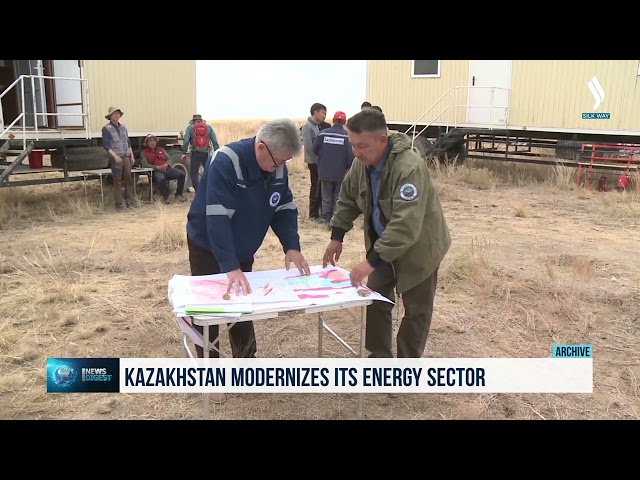
Tokayev also instructed to strengthen the country’s natural gas potential through the exploration of new deposits. Currently, exploration work is underway at 14 sites, with preliminary estimates placing natural gas resources at around 515 billion cubic meters.
«In the medium term, the exploration portfolio is expected to expand to 30 blocks with total estimated gas resources of about 1.7 trillion cubic meters. This will create a sustainable basis for increasing production and meeting projected domestic demand. At the same time, to boost investment activity and share geological risks, around 50 subsoil blocks are planned to be offered through electronic auctions,» noted Kazakh Energy Minister Yerlan Akkenzhenov.
According to the Ministry of Energy, work is also underway
on another key initiative – the creation of a unified digital map of water and
energy resources. The platform is expected to be integrated into a
national-level digital system. It will combine hydrological, topographical,
infrastructure, and legal data, enabling the system to develop optimal project
solutions, calculate technical parameters of future power stations, and reduce
the time required for pre-project planning.

Related Articles