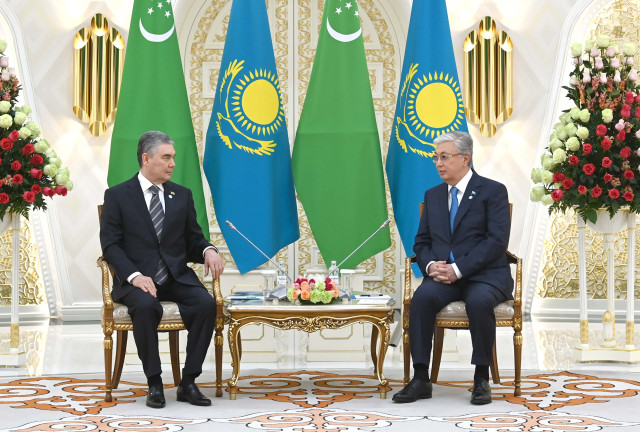


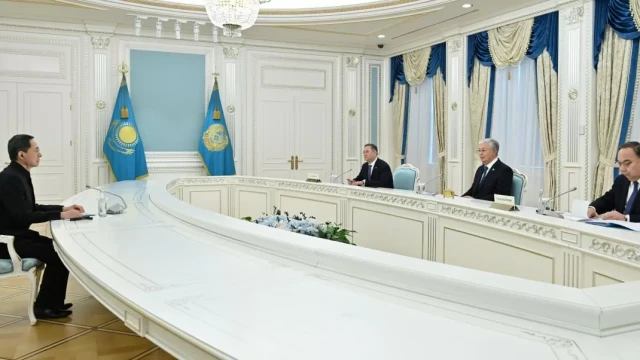
Political scientists and analysts highly commend the agreements concluded during the state visit of the President of Turkmenistan to Kazakhstan. According to them, this opens new chapters in bilateral relations. Transport and logistics are becoming an important part of cooperation between the two countries, with Kazakhstan gaining direct access to Iran and the Persian Gulf via Turkmenistan, while Turkmenistan gains access to China, Russia, and European countries via Kazakhstan. According to political analyst Tair Nigmanov, an important area of collaboration between the two countries has become their joint effort to preserve the Caspian Sea ecosystem.
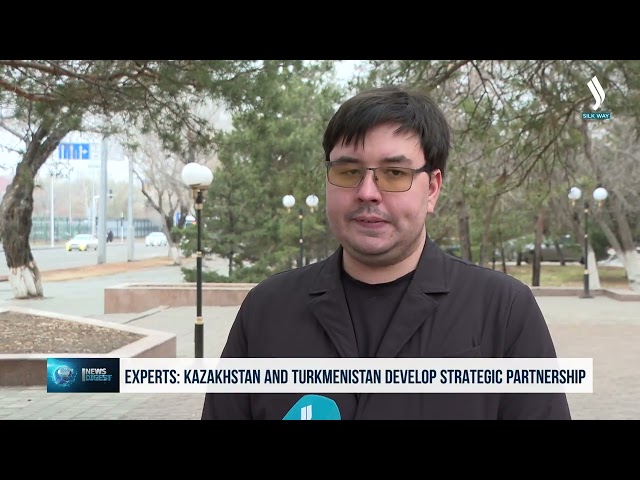
«I would not be exaggerating if I said that we have spent decades of diplomatic work to resolve the status of the Caspian Sea, because it determines how the waters are divided, whether there are neutral waters or, for example, how they are shared at all, as well as the continental shelf and related issues. Turkmenistan, as one of the Caspian littoral states, has been a participant in all these diplomatic processes. That is one aspect. On the other hand, we are to cooperate more closely on environmental and water-related issues concerning the Caspian Sea, which is becoming shallower. Our President has raised this issue at the United Nations,» said international relations expert Tair Nigmanov.
At the same time, Kazakhstan and Turkmenistan have agreed to strengthen cooperation in digitalization. The two countries are launching a joint project to build an underground fiber-optic communication line between Temir Baba in the Mangystau region and Turkmenistan’s Bekdash. The new line will significantly increase the capacity of international communication channels, create additional digital routes in the region, and enhance Central Asia’s transit potential. Construction is expected to be completed within a year.
«What will this bring to the country? First and foremost, it will have an economic impact. It is also intended to diversify traffic transit. As we all know, data transit is growing every year, on average by 1.5-2% in terms of the volume of information transmitted. This is being done to increase the number of connection points and interconnections with international operators and operators from other countries,» noted Azamat Seriktayev, Head of the Department at the Telecommunications Committee, Kazakh Ministry of Artificial Intelligence and Digital Development.

Related Articles