

Political
reforms in Kazakhstan are aimed at enhancing state resilience and institutional
stability, according to Professor Uli Schamiloglu of Nazarbayev University.
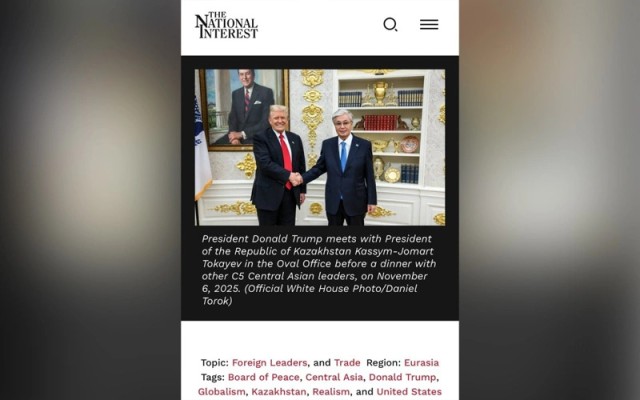
Commenting on the initiatives announced by President Kassym-Jomart Tokayev at
the National Kurultai as part of the political modernization agenda, he said
the proposed introduction of a vice presidency and a
potential transition to a unicameral parliament are in line with international
practice and could improve the efficiency of public administration. Schamiloglu also
highlighted Kazakhstan’s role as a leading Central Asian state,
noting the country’s commitment to a multi-vector foreign policy and dialogue
with international partners.
«I appreciate the efforts that President Tokayev has been investing in
trying to modernize the political system of Kazakhstan or at least changes so
that there is more stability. I think in terms of stability, in terms of
functioning, it won’t hurt and it may improve the situation. It seems to me that what
Kazakhstan is proposing would be more in
the interest of stability in the country, because I know that’s a very big
concern in this part of the world,» noted Uli Schamiloglu, Professor at Nazarbayev University.
Gavkhar Yuldasheva, a professor at Tashkent State University of Law, said the reforms initiated by President Tokayev could strengthen Kazakhstan’s position as a state governed by the rule of law. She described the President’s address at the fifth session of the National Kurultai as systemic and strategic in nature, emphasizing that active citizen participation in political life reflects modern global trends and is a key condition for democratic development.
«I believe this is one of the most important institutions today, one that allows us to determine how the people should approach making important decisions for the state. I believe this is one of the hallmarks of people’s democracy,» said Gavkhar Yuldasheva, Professor at Tashkent State University of Law.

Related Articles